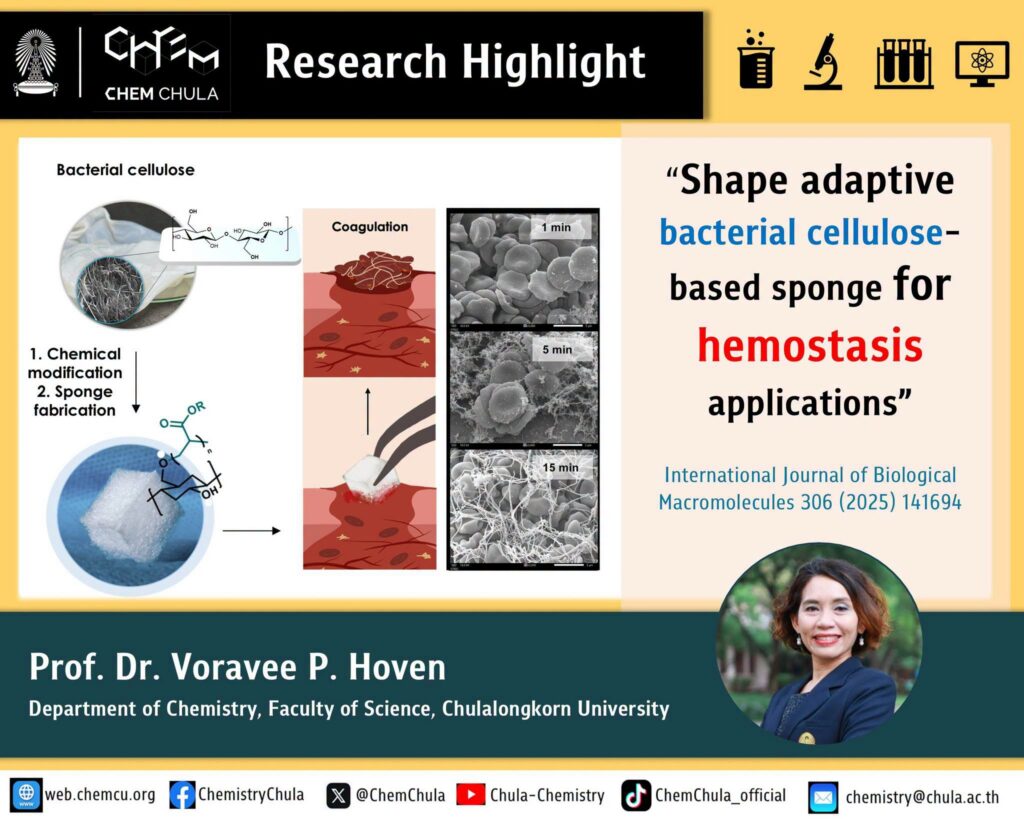
In situations involving wounds or surgical procedures, rapid and effective hemostasis is critical. Even injuries that appear minor and are commonly encountered in daily life such as knife cuts, tooth extractions, or wisdom tooth surgery, can lead to increased risks if bleeding cannot be controlled. These risks include excessive blood loss, infection, and other complications, particularly in patients who are prone to bleeding and experience difficulty achieving hemostasis.
However, commonly used surgical hemostatic materials such as oxidized regenerated cellulose (ORC) and gelatin sponges, while effective in controlling bleeding, still have certain limitations. ORC relies on its acidic properties to promote hemostasis, but this acidity may cause irritation to surrounding tissues. Gelatin sponges have a soft structure and high blood-absorption capacity; however, under conditions of active bleeding, they may disintegrate or lose their shape, reducing their ability to maintain a stable structure that supports clot formation.
To address these challenges, this research develops a bacterial cellulose–based sponge combined with natural polymers. The sponge can readily conform to the wound site and maintain its structure upon contact with blood. It effectively absorbs blood, promotes platelet aggregation, and supports the formation of a stable blood clot without adversely affecting blood components. This material offers an alternative approach that overcomes key limitations of existing hemostatic materials and enhances safety in both everyday wound care and medical applications.