
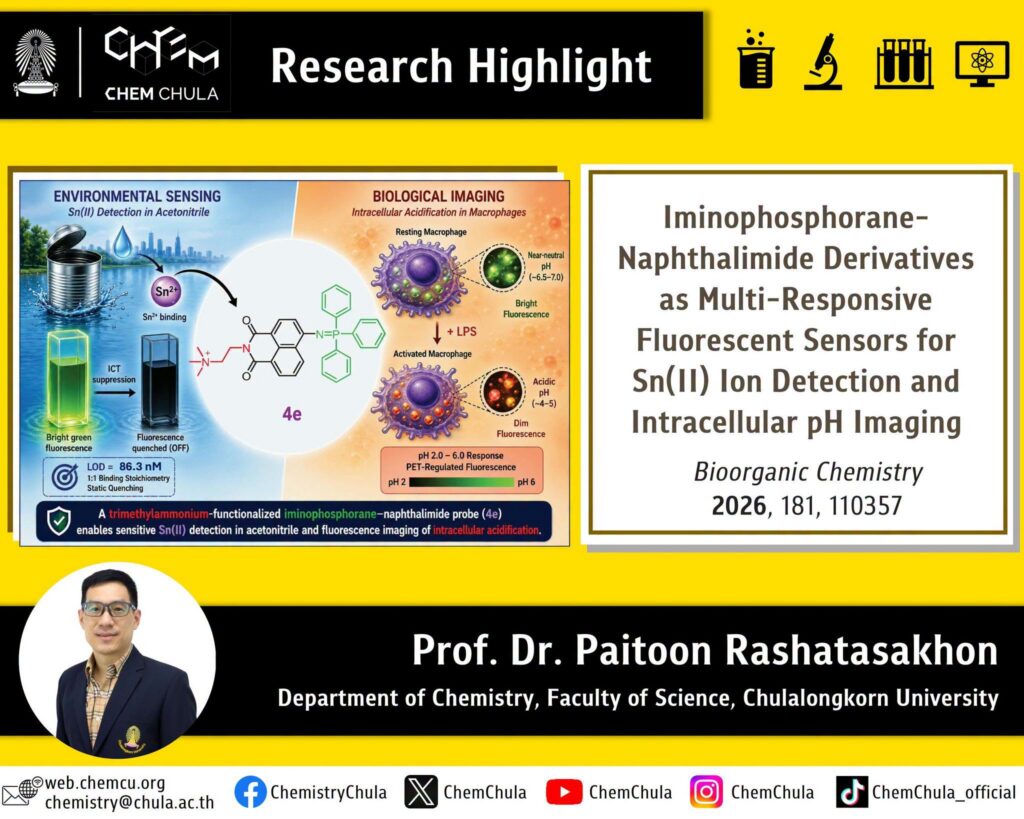
This research developed a multiresponsive fluorescent sensor capable of detecting Sn(II) ions and monitoring changes in acidity and alkalinity in biological systems. For Sn(II) detection, the sensor shows a clear change in fluorescence when it binds to the tin ion and can detect Sn(II) at concentrations as low as 86.3 nanomolar. It also responds rapidly and shows high selectivity toward Sn(II) compared with other metal ions. Tests using canned food samples spiked with known amounts of Sn(II) produced results close to the actual added concentrations, demonstrating its potential for further development in food safety and environmental monitoring.
Another interesting feature is that the sensor responds clearly to pH changes under acidic conditions. Changes in intracellular pH are associated with many important biological processes, particularly in activated immune cells, where certain intracellular compartments such as endosomes and lysosomes become more acidic. In this study, the sensor showed low cytotoxicity and was able to monitor changes in intracellular acidity in macrophage cells.
Overall, this work demonstrates a promising approach to developing multifunctional fluorescent sensors with potential applications in food safety, environmental monitoring, and the study of biological processes at the cellular level.
- Quynh Nguyen Nhu Pham
- Thitiporn Pattarakankul
- Tanapat Palaga
- Viwat Vchirawongkwin
- Mongkol Sukwattanasinitt
- Young-Tae Chang
- Paitoon Rashatasakhon